



The Itrana the brine and the Olives of Gaeta DOP
The Itrana olive falls into the category of dual-purpose cultivars, that is, suitable both for the production of oil and for processing into table olives.
It differs from the others for its late ripening, March-April, and the ability of the drupe to remain attached to the petiole despite the adversities of nature (diseases and mild weather).
We find it on the market in 5 production variants:
– Itrana Monovarietal Extra Virgin Olive Oil
– Colline Pontine DOP extra virgin olive oil
– Oliva di Gaeta DOP
– Itrana Nera in brine (harvested in March / April)
– Itrana Verde in brine (harvested in October / November)
The processing of the Itrana Nera olive in brine has ancient origins and represents a piece of history of the province of Latina.
It was an important resource for the Duchy of Gaeta from where, in the late Middle Ages, it traveled to the Mediterranean and also reached the markets of Northern Europe.
In the Renaissance, however, it enriched the table of Ercole I d’Este, father-in-law of Ludovico il Moro, Francesco II Gonzaga and Lucrezia Borgia.
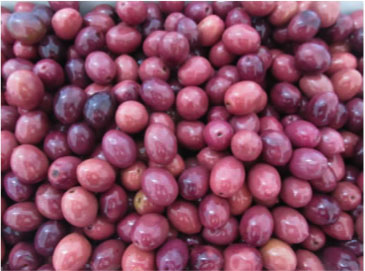
The processing method is more or less unchanged over time, the harvest is done by hand when the olives reach perfect ripeness (about mid-March) after selection, they are put in water and salt (7%) and ripening (for softening) at least 5 months.
It has become famous, and exported all over the world, with the name of Oliva di Gaeta, as it has always been called in the area of origin;
to protect it from imitations and counterfeits The Consortium for the protection and enhancement of the Oliva di Gaeta DOP managed to obtain the Protected Designation of Origin in December 2016, including 44 municipalities in the production area.
you can receive news about on the quality oil’s world, but also product news and promotions
You can unsubscribe at any time


