



The art of the dry stone wall
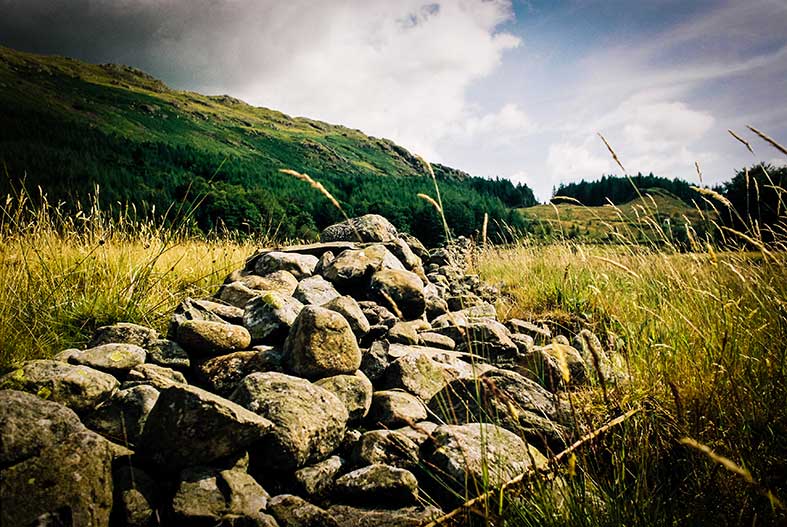
Dry stone walls
where the weeds cling to.
Terraces of Liguria
overlooking the sea.
Lands cultivated with bare hands.
Sweat of man
bowed over the clods.
Rows of black grapes
they are reflected in the sun
like rosaries still to be shelled.
The reflection of the sea intoxicates the olive trees,
leaves of eternal love shine.
Merciful flowers
they are born in the evening
and at dawn they die.
Walls painted in nature
where the grass borders
and the violets do not wait for spring
(Poem by Maria Rosa Oneto)
The art of the dry stone wall: Unesco intangible cultural heritage
The Committee for the Safeguarding of the Intangible Cultural Heritage, in 2018 registered “the art of dry stone walls” in the UNESCO List of Intangible Cultural Heritage.
Membership is common to eight European countries – Cyprus, Croatia, France, Greece, Italy, Slovenia, Spain and Switzerland.
UNESCO highlights that “the art of dry stone walls” consists in building by arranging the stones one on top of the other, without using other materials other than, in some cases, dry earth. This practical knowledge is preserved and passed down in rural communities, where they have deep roots, and among professionals in the construction sector. The dry stone wall structures are used as shelters, for agriculture or livestock breeding, and testify to the methods used, from prehistoric times to the present day, to organize life and work spaces by optimizing local human and natural resources. These buildings demonstrate the harmonious relationship between humans and nature and at the same time play a vital role in preventing landslides, floods and avalanches, but also in combating soil erosion and desertification.
In our country these walls have become characteristic symbols of certain areas, from Salento to Liguria, passing through Lazio, they are an example of a heroic agriculture of primitive architecture that fits well with the natural landscape.
The difficulties for olive growing
A critical element for olive growing in terraced areas (in addition to the little chance of mechanization, low production and objective difficulties in reaching the plots) is the human factor.
The workforce is almost non-existent, the average age is high because young people tend to move away from these environments that they find unproductive, poor entrepreneurial preparation leads to a distance from markets and the abandonment of land.

Italy on the front line
There are many initiatives aimed at mapping, protecting, reconstructing and enhancing the terraces.
- The “Mapter” project, Mapping of Italian terraced areas, coordinated by the University of Padua, is the first national attempt to quantify and count the terraced areas of Italy, 170 thousand kilometers of stones (they could reach at least 300 thousand hectares considering 75 % in a state of abandonment).
- “Choices for the future” is the third world meeting on terraced landscapes, it was held between Padua and Venice, and in 10 other Italian locations, in 2016, with 250 participants from 20 countries with the challenge of finding new ways of life and activities that treasure these resources inherited from the past.
- The world alliance of terraced landscapes (Itla) states:
Believing in the future of terraced lands means taking their vitality to heart, that is, believing in the contemporary meaning of their formal and symbolic qualities, in their being exemplary models of integrated and sustainable management of the territory, in the importance of skills and knowledge preserved over time by people of these lands. - On 25 June 2017, in Terragnolo (TN) during the Festival “Sassi e non solo” and the competition for the construction of dry stone walls, the World Alliance for Terraced Landscape Association – Italian Section, the preliminary document was signed for the establishment of the Italian School of dry stone, meaning by this to start the process of setting up the Italian School of dry stone.
- For the first time in Italy, in 2015 Trentino recognized with a provincial resolution (858/2015) the professional qualification of “Expert builder in the construction and recovery of dry stone walls”
In Lazio, the terraced olive groves of Vallecorsa (FR), on the slopes of the Ausoni Mountains, have for a year been one of the 12 sites recognized by the “National Register of Historic Rural Landscapes”, established in 2012. The presence of these terraces, in fact, is attested since the statutes of 1327. But 15% of this heritage is now abandoned and, writes the Ministry of Agricultural, Food and Forestry Policies in the report attached to the Register, “the abandonment of cultivation constitutes the greatest threat to the conservation of ‘integrity of the terraced landscape ”.
The La Carboncella agricultural cooperative has been recovering olive growing since 2013 and managing 20 hectares of olive groves.
“In four years we have put 5 thousand plants back into production, employing eight people,” says agronomist Ernesto Migliori. In this area where there are 600 hectares of terraces, 95% of the olive trees lie on dry stone walls, called “macìeri”. “We believe that this rural landscape is an essential component of Vallecorsa’s cultural identity” and to enhance it they managed to network with the register of agronomists of Frosinone, the faculty of architecture of the Roma Tre University and that of economics of the University of Cassino, to apply for FAO recognition as part of the Giahs program (“Globally important agricultural heritage systems”).
you can receive news about on the quality oil’s world, but also product news and promotions
You can unsubscribe at any time


