
Observatory on the tourist enhancement of extra virgin olive oil
Observatory on the tourist enhancement of extra virgin olive oil.
Memorandum of understanding signed
Training for oil-tourism companies and restaurateurs among the short and medium term objectives.
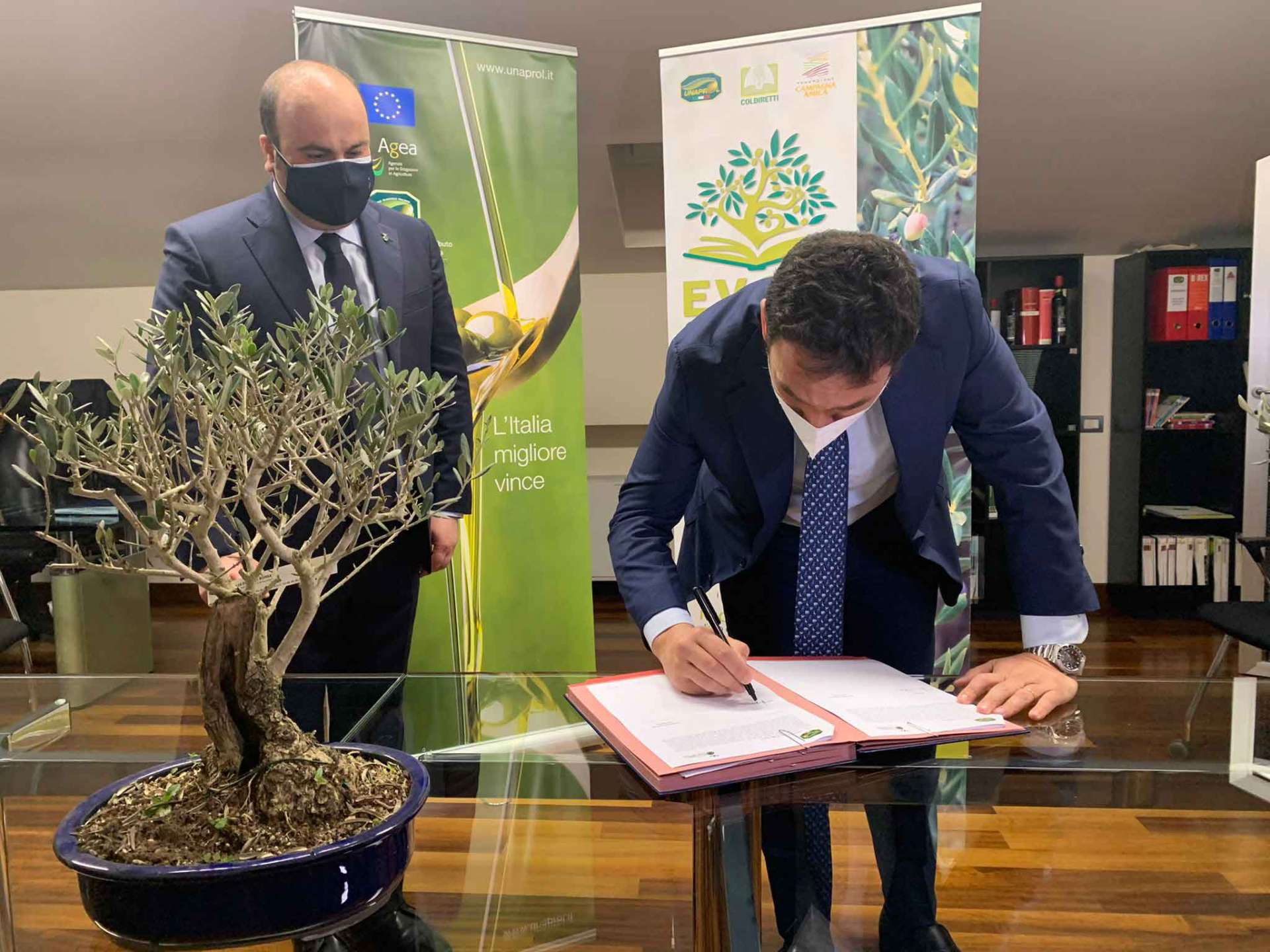
From the alliance between the City of Oil and UNAPROL, the Observatory on the tourist enhancement of extra virgin olive oil was born. The initiative is one of the objectives of the Memorandum of Understanding signed yesterday by the National Association which brings together 350 Italian olive groves and by the Italian Olive Consortium which brings together 160,000 companies in the olive sector. A pact based on shared values and visions that represents a concrete commitment to the promotion of initiatives aimed at the tourist and cultural enhancement of Italian extra virgin olive oil. We will focus a lot on training for companies that intend to carry out oil-tourism activities, enhancing the realities that invest in environmental sustainability and giving them support in the implementation of projects aimed at the use of renewable energy. Also involved are the restaurateurs to whom a specific action is aimed at promoting a correct food culture that enhances and gives dignity to the role of Italian EVO oil. What’s more, Città dell’Olio and UNAPROL are committed to the joint organization of conferences, seminars, workshops and courses dedicated to EVO oil and other products of the olive oil chain and in the joint study and promotion of regulatory initiatives aimed at to the development, integration and improvement of the discipline referring to the tourist valorisation of oil. Finally, a specific action plan will concern the enhancement of oil mills.
“For the Cities of Oil, the collaboration with UNAPROL is strategic. The world of oil companies and restaurants plays a key role in the tourist enhancement of extra virgin olive oil. The institutions and entrepreneurial forces of the country must work together to unite product and territory – declared Michele Sonnessa, president of the Città dell’Olio – Oil tourism, to exit the niche market, needs courageous choices, public and private investments in innovative and sustainable projects and clear legislation to support entrepreneurship, especially young people. Finally, we must restore centrality to training not only aimed at consumers but also at restaurateurs, oil millers and olive growers. They are the first ambassadors of Evo oil, around their experience we can build a shared knowledge capable of translating into an attractive tourist offer for visitors ”
“The signing of the memorandum of understanding between Unaprol and the National Association of Oil Cities – comments the President of Unaprol David Granieri – fills us with satisfaction. We are sure, in fact, that the collaboration with such an authoritative partner can lead to a strategic path of tourist and cultural enhancement of EVO oil and Italian table olives. Biodiversity, millenary cultures, history, taste, breathtaking landscapes: the Italy of oil is all this and much more. The relationship between Olives and Man has shaped our territories in an amazing mosaic, from which products are born that express in an unrepeatable way the interaction between environmental components and human skills. Not surprisingly, with 540 varieties of olive trees and as many as 52 of EVO oils and PDO or PGI certified table olives, Italy is a world leader in Designation of Origin products. Raising awareness of the Italian olive heritage, spreading the culture of extra virgin olive oil and table olives in their link with the territories and local gastronomies, seizing the opportunities of oil tourism, promoting the sustainability of the sector: these are just some of the issues on which we will work together – also with the didactic and scientific support of the Evoo School Foundation – directly involving farms, oil mills and restaurateurs, to transform those who visit the olive territories into the most enthusiastic ambassadors of our agri-food excellence. ”
Source: Unaprol (read the original article)